What Can I Do for You? A short reflection on Cyberpunk: Edgerunners




Table of Contents
This post contains spoilers for Cyberpunk: Edgerunners.
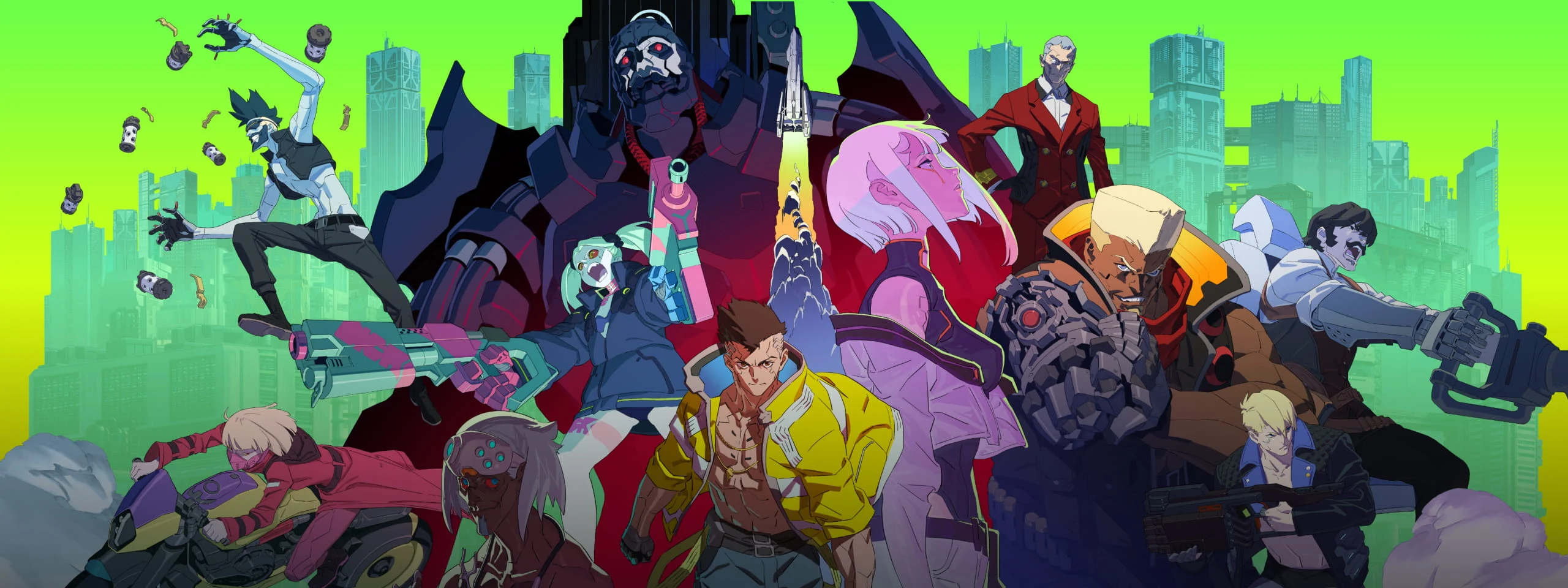
Official promotional artwork from the Cyberpunk: Edgerunners website.
What makes Cyberpunk: Edgerunners so devastating is not merely the fate of its characters, but the fact that they have almost no real choices from the very beginning.
Almost no room to choose
Night City’s social system leaves ordinary people little room to change their fate. To gain even the smallest chance of survival, they must constantly prove that they still have value to other people, to organizations, and to society. They sacrifice their own dreams to fulfill those of others, numbing themselves with the feeling of being “special” that comes from burning through their lives—as if a life must have meaning so long as it burns brightly enough. Yet the sense of worth they gain from this self-consolation is vanishingly small.

Official series artwork from the Cyberpunk: Edgerunners website.
Two incompatible wishes
Even love—the place where they invest their emotions and briefly escape reality—cannot give them a perfect ending. Over time, their wishes come to contradict each other: David clings to Lucy’s original dream of reaching the Moon, while Lucy’s real wish becomes reaching it with him. David wants to fulfill what he understands as her dream through self-sacrifice; what Lucy truly wants is simply for him to stay alive. By the end, these two wishes cannot be fulfilled at the same time.
A question hardened by survival
There is no easy way out. Under the pressure to survive and move upward, people have to devote all their attention to one question: “How can I make others see my value?” They have no time to consider what they genuinely want. Even if they manage to understand it, those desires may be little more than fantasies—overthinking, or things beyond what they can achieve with the power they possess now.
Day after day, this pressure can be distilled into a fixed way of thinking:
“What can I do for you?”
Rather than:
“What do I really want?”
This is also one of the reasons their relationship ends in tragedy. They are too accustomed to living for others and expressing love through self-sacrifice. They forget that perhaps real love is not about fulfilling someone else’s dream for them, but first asking: what does that person truly want?